Episode Transcript
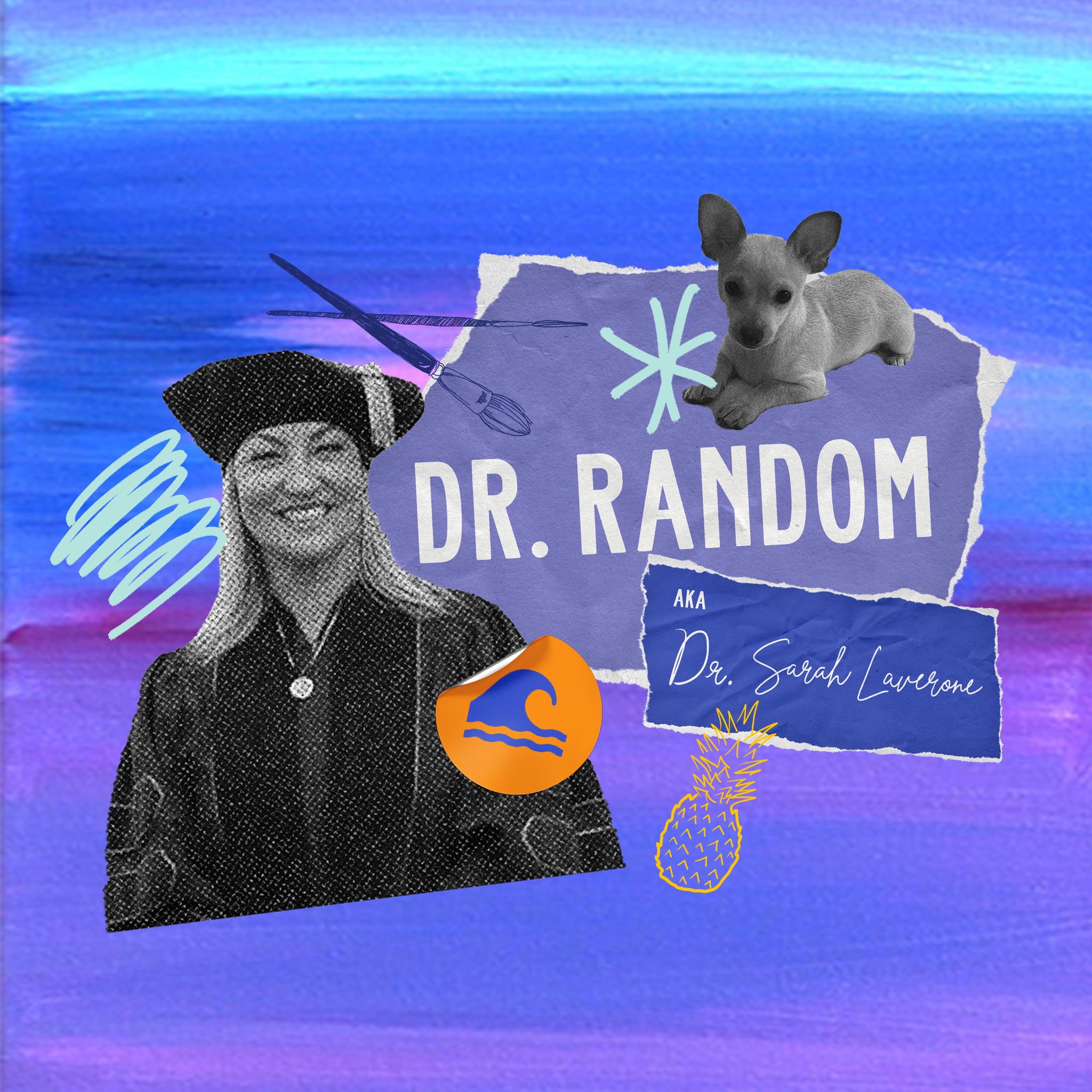
[00:00:00] Speaker A: Welcome to the Dr. Random podcast. I'm Dr. Sarah, and here's the deal. We don't do boxes here.
Every episode is different.
Every conversation has its own flavor, and no topic is off limits. If you're looking for predictable, this isn't it. But if you want real conversations, honest takes, and a touch of intellect in the best way, you're in the right place. This is Dr. Random podcast.
All right, well, hello, everybody. I am here on the Dr. Random podcast. I'm Dr. Sarah, and today we're going to be discussing the book the Fatherless Daughter Project.
And our guest today is actually the author, Dr. Karen Louise. She's amazing, and I'm so glad that I connected with her.
And we. I don't know, we hope that you're just gonna enjoy this conversation as we deep dive into this topic that I find so important and has had an impact on my life as a fatherless daughter. But I want to go ahead and introduce Dr. Karen Louise, and she can go into, you know, her journey and her current endeavors and everything she's excited about, and then we can dive into our conversation.
[00:01:23] Speaker B: Yeah, I'm really excited about our conversation. I love that this book resonated with you. It. It healed me to write it. And so just to introduce myself to everybody, my name looks like Karen, but it's Karen. And I started out as an elementary school teacher, actually. And then after having a lot of life change and going through some of my own healing, a lot of it related to my father issues, I ended up going back to school and becoming a therapist, and I got my master's degree and then went through a bunch more life stuff, and then went ahead and got my ph in counseling and education. And in all of that, one of my best friends, Dina Babel, who's the co author of this book, reached out to me and she's like, I have this great idea for this book. She lost her dad by.
He was murdered. And I had a bunch of daddy issues having multiple fathers and one that gave me up for adoption to an abusive stepfather. And then my mom has been married three times, and my third father passed away last year. But just a lot, just like most of your listeners, a lot of layers.
And so she said, I have this great idea. I have an agent that wants to do it. I know it's going to change so many people's lives, but I need a doctor on it. Can you help? And I was like, yeah, not okay. So. So, Dr. Sarah, I didn't even realize all my daddy stuff was going to Come up. When I wrote the book, I was just going to be the doctor on the book.
Well, lo and behold, I started writing it, and we did. I love researching, and I created a survey, and over 5,000 women internationally took this survey. And we found so many interesting things. And I ended up just breaking open with my own daddy stuff as I started hearing other women's stories and I was really interested in. My main goal in writing the book was not only to heal people, but to help women understand how this affected their life developmentally. Like how it affected you when your dad died is really important. How he or not even died. So it can be through death how you. We. We used the. The explanation. You lost the bond with your dad.
[00:03:19] Speaker A: So.
[00:03:19] Speaker B: So it could have been through death, it could have been through divorce, just complete absence, addiction, incarceration. There are many ways, but it's really defined as he could have been in the house the whole time. And you still, like, have a really big father wound because your bond just never got concreted like it was for friends of yours. Right? So we talk a lot about what happens then developmentally as you grow up, and then as you get older and you realize, like, these other girls have this great, perceivably, you know, relationship with their dad or their dad got to be there or for their milestones, the wedding, the birth of their child, their first apartment, and. And you've become this lone wolf kind of this warrior in the world. And we wanted to look at just how psychologically it affects you, how we look at how physically it affects you. I wanted to see the coping mechanisms. Most women, positive and negative, so we can talk about that. And then, you know, in it, I ended up having a big spiritual awakening 3/4 of the way through the book. And so the book was just as human healing for me as it was as I'm hoping it is for those that are reading it. And then, since then, I focus a lot now on spirituality. And I'll just say that as a very end note, I'm finding now in my work with people that are having big kind of life reinventions and life shifts, that a lot of the awakening of their own power comes through healing this specific wound. So it. It's actually resurging right now, a few years after the book was done, more than actually it has. Like, this year, I'm getting more messages and requests to talk about this book than I have over the past couple years.
[00:04:49] Speaker A: So it's.
[00:04:49] Speaker B: So. It's very timely. We're healing a lot right now, collectively.
[00:04:53] Speaker A: And Individually, those are some amazing points, and I love the new research you're doing, too. I love, you know, your passion behind helping others, which is my whole goal with even choosing this topic today for the podcast, because the book was so helpful to me, and I been sharing it with others, and I want to share it with the world. So I just had never ran across a book like this before, and I actually found it. I happen to be looking for some, you know, new books to listen to, and I ran across this one. I was like, wow. And I started listening to touches on things that I think, you know, there's a lot of people out there that unless they actually go through the loss.
For me, I lost my father through death.
And it was sudden, and it was tragic, and it was not expected at all.
I was fortunate enough to have him, for I had just turned 20 years old when my dad passed, and it was a heart attack, sudden. And I saw him the night before, like normal, having conversation. The next morning, he was gone in. In a coma for nine days. And I never got to say goodbye to him.
And he was an amazing father, so I also feel blessed in that sense. My dad was so fun. He taught us how to, you know, we went camping and went fishing. He was an outdoorsman, and he drove a Jeep. So, like, we would go off roading, which kind of scared me sometimes when you'd get a little sideways, but.
But he had three daughters, and so he, you know, taught us all how to kind of do outdoorsy things, which was fun.
[00:06:31] Speaker B: Yeah.
[00:06:31] Speaker A: And I'm the oldest of three, and I think that also what the book touches on is kind of that role of me being the oldest of the three and also, you know, dealing with my mom and what she was going through, losing her husband suddenly.
There's just so many factors to the scenario of losing a father that, you know, it plays into the role of being a sister, a daughter, even of the mother who survives in my situation.
There's just so many factors and layers to this, and I think that what the book touched on that moved me so much is it talked about also dealing with my own relationships and things that I deal with, insecurities.
Because you lose something you love so much suddenly, and you go through life, sometimes you're almost, you know, you approach everything kind of with a caution.
And I will say I feel like I've done a lot of work on this. You know, I've gone through therapy. I've read books. I also like. Like to put credit on my faith myself. I choose that I feel like my faith in God and all that has really helped me through a lot of this.
And I think, you know, there was just a lot of healing. And I'm glad that I'm in a place now where I'm ready for love and feel like I'm willing to accept that.
But it. But I. Reading this book, I look back on times and I'm like, wow, that's so true. That's so right on.
And I think, like, wow, there's some people out there that are kind of in that messy stage right now of dealing with this grief. And your book just touches on so much.
[00:08:20] Speaker B: Well, you're speaking to. You know, we. We do cover the loss by choice. The loss when the father chooses not to have the bond. Right. Like, kind of what I went through. And then the loss by, like, sudden death or the specifics of. Of the death do matter. And they both have their unique aftermath. For the daughter, the daughter that loses a dad like you did, especially when he's a really good dad, like, there's more. The idealizing of the dad gets very, very strong. And then the loss feels even bigger over time, right? Because he was such a great dad. And so that void feels really empty. And then, you know, the thing about the relationships is where, where that loss will come up, where the unhealed or. Look, we're all working on our evolution, our growth always, right? Like, we're never done. Okay, so never judge yourself. You're doing the best you can.
And. But the place that it is 100 always going to come out is in your relationships. And any grief that went underground, especially for girls that lost their father or lost the bond with their dad early, the long. The grief will come back up when you have your next loss, and that usually is in your next relationship breakup or your divorce. And we found that a lot. And that was. That happened to me too. Like, it's like nobody dealt with it because nobody went to therapy. When I was young, when all this was going on, and then I had a divorce, and it was like I was hit with a Mack truck. And it was so devastating. And then what we found in the research was, well, this is why, because, like, you being the oldest, Sarah, the girls that can relate to that, or if you're the youngest, like, it's. There's always a.
A responsibility put on you, especially if your mom is still there and she's going through her own. Like, you have to step in, right? As a daughter, that's unique to, to women. It's different than What. What men go through, typically.
And so the woman tends to. The daughter tends to then take on a caretaking role. And very often those roles shift depending on how much the mother is grieving and how big her loss is. And then it's like what you're feeling because you feel this responsibility for your mom.
A lot of times our grief goes underground, right? And that's why it tends to come up later when there's another significant loss, because then that grief gets triggered and that disappointment. And so in that.
And Sarah and I had the privilege of talking to Sarah yesterday, so I know a little bit about her story in that we talked about how the need to hold on to relationships, then. I think this is a common thing that happens no matter what your loss is.
Because, like. Like what you were talking about with the Jeep, flipping, like.
[00:10:47] Speaker A: But.
[00:10:47] Speaker B: But the fear of the sideways is what I mean. Not. Not flipping. We don't. We don't want to put that. But anyway, the dad is there to ground you, right? He's there to. To keep you safe. Like, I've got you. I've got it. And even if something happens, like, the dad is there to protect, to teach you how to, like, you know, it's great that he had three girls, right? He teaches you how to get back, like, wipe your knees off, like, come on, we're gonna keep going, like that. Masculine energy is something that men typically give their daughters.
[00:11:09] Speaker A: Well, I.
[00:11:10] Speaker B: Like, I. My dad didn't really ever do that, and. And you had it, but then it was taken away, right? So there are times now in your life whenever you probably feel weak or you. You need to call someone or you need someone to come help you bring the couch up to your first apartment. Like, there's no one on the other side of the line, right? And then. And then what happens is when you have relationships and you do have that next counterpart, you. You will do anything to keep them. Typically, we will either just get really desperate and act in ways that we. That really aren't typical to our innate nature, because we want that feeling that we identify with. The avatar, which is our current partner.
They represent to us what our dad. The absence of our dad is, has us missing. And so we will tend to put up with. And I'm not saying this is all the time. I'm just speaking in generalization, because very often we will pick people. Depending on your wound, we can pick really dysfunctional partners, but it looks different for everybody. But. But if you do, we will tend to kind of bend ourselves inside out because the number one fear is being abandoned again and being lost again. So we will do anything that we can to get them to see how worthy we are, to get them to see how valuable we are, and. And just to beg them. We will put up with a lot more than women that haven't been through that because we're so afraid of feeling that fear, feeling that loss again. It will drive us into almost being someone that we innately would not be.
[00:12:40] Speaker A: If that makes sense.
[00:12:41] Speaker B: And I know we talked about that a little bit yesterday.
[00:12:44] Speaker A: Yes. And I think that masculine energy is such a loss, and it's so important to have.
I myself, I've been single for a couple years now, and I think I've just decided that, you know, I want somebody who will come in my life and is ready to just, you know, be willing and open to be there for me instead of having to. What you just discussed, where I feel like I have to constantly be proving myself to them because I'm afraid of losing them, and I want to keep that in my life. I, you know, you want a man in your life, and I think that, you know, the. The biggest thing that we notice as far as the dads, too, though, is, like, with, you know, holidays, big milestones, things like that, where it comes up again. And it's amazing how, you know, I. I can go, you know, I still will know when it's his birthday and I'll think about it, or the date that he actually died or the day he had his heart attack. All those dates stick in my mind. And when they're there, you know, it's so weird. Like, right now I feel like I'm getting emotional.
That's love.
[00:13:59] Speaker B: I mean, that's love.
[00:14:00] Speaker A: You know, it's like when those dates pop up, you think, like, I mean, it's been years, and you think, why am I still, you know, getting emotional over this? But you do. And I think it. It takes a special person to know, like fatherless daughters out there. It's like we, you know, that comes up, and it's a constant thing, you know, you're not, you know, and it pops up when you least expect it. You don't know when you're gonna get emotional or, you know, but it's a healing process.
Yeah.
[00:14:38] Speaker B: And that's why it's so important to have a community and to talk to people that you can trust. Like, this conversation is. Is hopefully going to be very healing for people to have other people in your life that can relate to it, because people that can't they use the phrase get you got. When are you going to get over this? Whenever someone says that to you, it means they've never lost anybody. Because I, I will never let a client or anyone say get over. Because we don't get over things because they're embedded in our DNA. We, we learn to integrate the reality. And it's, it's a, it's, it's your. It's cyclical and you learn to live, Live with it. You don't get over it. And you know, you, you have more peace with things, obviously, once the initial grief subsides. But what you're talking about is so important and it's really important to say because you're not weak, you're. Nothing is wrong with you. We found that the hardest day of the year for fatherless daughters is Father's Day because there's such an influx of idealism over dads in, in media, social media, what gonna you. That's the day that it's just like in your face, right? And then the other big days are the milestone days in your life, which is wedding, birth of child, those things when, like, especially wedding, where the absence of the dad is felt. Like you were saying your commencement. When you. Because, see, and with grief, we have the loss at hand, right? And so the loss at hand is its own grief point, right? The physical body. The day they died, the day they left, the day we realized that we didn't really have a bond with our dad dealing with that. But the bigger piece of the grief is actually grieving what was supposed to happen.
So as you go on with your life, that second piece, which is bigger, you're going to consistently be faced with, well, he was supposed to be here. Look at my other friends. Their dads are here. When you're at your sorority thing and all the dads are there when you're, when you start to go to all your friends. Wedding for listeners that are in their 20s and 30s, when your friends start to have kids and you see that their dads show up and they have all these pictures of their dads with their babies and, or whatever, whatever it is your wedding day, you feel it on a deeper level and there is a longing. So know when you're going through that, because anyone with this loss is going to go through that. It is normal. It means that you are grieving. It means that you loved. It means that you wanted to still be loved and that you miss that. So on those days, it is significantly important that you let those that are closest to you, if you're in a partnership or you have roommates or just your best friend, that you reach out and say, either you're going to just disconnect from social media, you're going to go on a hike, or you're gonna, you'd like to meet somebody for whatever your favorite thing is to do, you need some tlc. You, you can write a letter, you can either go right into it or you can do something that distracts you. You can go to a comedy show or decide that you're just going to watch, you know, bing chick flicks all day. Whatever it is.
Nothing is wrong in the grief process. This is very important too. Like, everyone's grief is different. I've made a pact after going through so much of this with people in my life and myself, like, I never judge people's grief. Only people that judge people's grief are the ones that don't know how to do it themselves because, you know, like, it's, it's different for everybody. And so, you know, you mentioned faith. That is one of the. I forget which number it is, but I feel like it's in the top three coping mechanism. It's probably second. Number one actually was music, which I've always found is like, really, really great.
Yeah. And nature and faith, like, those are top three. And then, and then community, having people around you. But music like, isn't that cool to know? Like, I loved that piece of our research that came out way on top that, that fatherless daughters, like, that was the number one thing that helps them. And of course, so whatever you're doing, whenever this airs, whatever the next holiday is, like, it's okay. Find that one or two people that are going to understand you and say, hey, like, I might need to cry or is there any way we can go grab a margarita or go hike or whatever it is. Like, I need to be. I just need to be loved today because I'm really missing my dad more than normal. You're not abnormal. It's. You're right on time. So I just want to acknowledge how normal and how actually important it is to feel it. And then I'm just going to say this and then we can move towards whatever else you want to talk about. The.
In my research lately on, I've done a lot of research on trauma recovery and now I, I look a lot at the fact that, you know, pain is inevitable, but suffering is a choice. So on those days when you need to really feel it, it's really important to go into it. But what I've learned recently is that. And I do this in my own life.
If you're okay and you're not feeling too fragile, if you're not too close to the wound, if you're not in the trauma, okay, this is not for being in the trauma. If you're in the trauma, please get trauma based help. You really, really need it. You deserve it. That's really important. I've done emdr. I've done deep trauma work. Like, do that. But once you get kind of past the initial trauma and you feel like you're a little stronger when those emotions spike for whatever it is. Like the other day I got a, A diagnosis. It's not severe, but it's one that I was like, dang it, I sat in my car and cried because I don't have a partner and I can't call my dad. And I had. I had to feel sorry for Karin moment, right? But I know that's okay. This is. Because this is what I would tell a client to do. I sat in the freaking parking lot of that. This was just three days ago of the doctor's office. And I'm like, I have arthritis in my toe. Okay? That's the diagnosis. It's not. Whatever. And I have a bone spurt, whatever. But I was like. And I just like sat there, I found out I'm gonna maybe need surgery, whatever. But I. And I let myself, though, have a good, feel sorry for myself moment because I'm like, I don't have a person to call right now.
I'm going to feel this. And so research now shows like 90 seconds. If you can just sit in it, cry it out, call your bestie, ride it out, scream it out, dance it out and let your body do a. Some, some kind of somatic release that involves some kind of movement. All of that involves movement. I do a lot of moving through grief right now. I do a lot of somatic healing. You will feel better much quicker than if you swallow it.
And I know you can't emote in all places, but I will promise that has been one of the number one tools. Sometimes you got to cycle through it a couple times. But if you will just go right into it, be like, fna. Why aren't you here? I don't have anybody. Do your pity party. Say all the mad, sad, angry, all the things. Just give yourself voice. Open your throat chakra. We shut this down way too much. Give voice, Give voice, Write it out. Call your friend. I have friends that will just leave each other voice memos. And I'M like, you don't even have to listen to it. I just need somewhere to put this. Kind of like we're doing right now. Just let me just put my truth somewhere. And if you just do that when Christmas comes, when you have your whatever, whatever, you will feel so much better in 90 seconds. Research is showing that now. So I'm very passionate about people moving. Greet women moving grief through their body, Sarah, because if not, we will end up getting sick. So it's really, really important that you move it, that you honor it, and that you find everyone's not going to get it. Don't call that person that tells you to get over it or wants to know when you're gonna be done crying. Like that is not your grief sister.
[00:21:38] Speaker A: Yes. Okay.
Yes.
That's so interesting because you just brought up a good point.
Especially with being single, you know, not having a husband or a boyfriend and not a father. It's like you, you know, you can go to mom or sisters or other people, but sometimes you just want that safety feeling of masculine energy, like you said. And it's so important. And, and there are a lot of.
[00:22:07] Speaker B: Women too that are in really bad marriages or relationships that feel the same thing.
You know what I mean? They are in it, but they don't get that.
[00:22:15] Speaker A: So.
[00:22:15] Speaker B: But you're right that it is a very. It's almost like there. It's almost like you're free falling and you feel like. Because dad offers that like safety.
So, you know, and mom can do that too. A lot of moms fill in for that very well. And we did find, I'll say this too, in the.
That a stand in dad, somebody else that stands in can be extremely, like monumentally healing and important. Like that new stepdad or a grandfather or just someone that feels fatherly, a best friend turning to that person, if there can be one in your life that actually makes a huge difference.
[00:22:49] Speaker A: Yeah, it's interesting you say that because actually I was very close with my grandparents and after my dad's death, within five years, I actually lost both set of grandma.
[00:23:00] Speaker B: That's a big deal.
[00:23:01] Speaker A: And that was a lot.
And it kind of did just feel like the safety net under me fell out, you know, and. But I think one thing I am looking forward to and I don't know, and it's funny, the insecurities we talk about, the thoughts we have. Like, I have this thing where I'm like, oh my gosh, a guy is gonna marry. If guy wants to marry me or get serious with me, I'm Like, I don't have a dad. Like, they're gonna think, like, oh, who's the grandpa gonna be besides their set of parents? You know what I mean? And I think, like, do they think of that as, like, a huge loss? You know? And it's weird that I would even think that, but I do.
And, you know, I think, like. And it kind of, in a way, you know, I feel like, you know, once I do find my person, I'll probably want to really dive myself into their family, you know, I'm gonna, like, love it and want to be surrounded by that, you know, but whether they have that or not. But it's just interesting, the thoughts we have, for sure.
[00:23:57] Speaker B: And I think.
I think that's a really normal. Because we end up. We start feeling like, you know, either we're too much or we don't have enough, right? Like that. That's actually universal. So this isn't specific to us, but it gets heightened with this. So I want to normalize that. Honest to God, Sarah, every. And I've been doing counseling and therapy for 25 years. Like, everybody has a feeling about that for whatever reason. So I want to remind you that if you feel like you've got a ton of baggage because of your dad's stuff, like, believe me, men just do a better job of hiding it. But they've got their baggage too, right? It's not like you're going to be walking in with a perfect. That a person that has everything. Nobody has everything perfect, right?
So if you can, in your mind. And it's a very normal, again, thing to think. But it's like, okay, but. But what else do I. What do I bring with me that other people aren't? And that is. I'm really resilient. And that is because my dad isn't in my life the way that I really needed him to be. I've had to learn how to do this stuff for myself. Like, I'm pretty badass. That's one thing that we found. Like, I'm not kidding. Fatherless daughters were badass. Like, look, I mean, you're starting a podcast follows. Daughters are literally, like, they're the CEOs. I'm not kidding. Because it's like.
And it's always a choice, right? So we can go and find a pole to dance on, right? We can. A lot, you know, whatever. No, shame on that. But I'm saying that there is a choice to, like, take it and maybe not use the most positive copy mechanisms because of whatever that dysfunction is or we can funnel it into. I'm going to create something out of this and turn this instead of, instead of remaining the victim and staying on a pathway that's really not going to serve me. I'm going to turn this into something powerful. And that, that's the twist, right? So what I would challenge you with and anyone else that has those feelings, of course I've navigated them too, but I'm probably much older. The most of your audience is to flip it in your mind and be like, all right, but what do I have?
[00:25:49] Speaker A: Like, what do.
[00:25:49] Speaker B: And by the way, like, men don't think about that as much. I, I don't think, I think that men, if they do have their parents intact, they'd be like, woohoo. Then we get to be with my family at Christmas. And like, like that's actually kind of ideal, to be honest. Like, I'm not even kidding. Like, so there's kind of a flip. And then it's like, you're like a badass. You can take care of stuff. You've learned how to live, you know, on your own and you're really independent and you know, you're not going to be like, you're not going to be as immature as a lot of girls or women that, not that they're going to be all immature, but you have a maturity, you have a knowing and a wisdom about you that people that have not faced something this significant aren't going to have. And you, you probably are likely that you're gonna, not that this is going to be 100%, but I would guess that it's likely that you're probably gonna really jive with someone that's had their own kind a loss in their life too. And then in that, and you don't know because you don't know the person that's gonna, gonna love you yet. You haven't met him yet.
[00:26:49] Speaker A: But there's.
[00:26:49] Speaker B: A chance, a likelihood that part of what connects you is maybe he's had a loss in his life too. And then you guys can buoy each other.
[00:26:58] Speaker A: Yeah, happens a lot.
Happens a lot.
[00:27:01] Speaker B: Because then you'll get each other and he'll be like, nobody. And I'll put this out there for you. He'll be like. And it could be a loss of any, anything, but he'll be like, nobody's understood me. So here's, here's the silver lining. Nobody's ever understood me the way that you understand me. And, and when you've been through traumatic loss, you're able to hold space for people in a much more qualified way.
And I've heard over and over and over again from. From guys like, no one, like, girls aren't like this. Like the fact that you're not judging me and you, like, are okay with what I'm telling you. Like, most girls, like, don't know how to handle all this. So you're qualified to be a really, really great partner.
[00:27:42] Speaker A: Quite the opposite. Yeah.
[00:27:44] Speaker B: Okay.
[00:27:47] Speaker A: Yeah. And, you know, I wanna speak too, to the book, which is, you know, girls out there, you know, who didn't lose their fathers by death like me, but their fathers are still alive but not fully present emotionally in their lives and stuff. And I know that you talk about some really good key points about what they could be going through when they're kind of in the mess of it now and, you know, maybe how they can work through it. What you suggest and bring out in the book to help on that.
[00:28:23] Speaker B: Yeah, it's a different kind of. There are a lot of similarities. But. But the specific. Because that's. I'm one of those. Is that we often tend to.
There's usually a sexual component and women tend to go one or the other direction. They either tend to like, totally shut that down or. Because that's where. That is where your. Your feminine femininity rises and expresses itself. It's the very natural part of becoming a woman. And you know, it's linked to healthy relationships with men. And when you haven't had a healthy relationship with a man, like, like one of the things that women who didn't have the bond with her dad, like, I did like. And my co author talks about this a lot too, because her dad actually was really absent before he died. So she kind of had both.
If and when you read the book, you'll see that or listen to it on audio.
The.
There's a.
There's an ongoing void and then there's a.
Sorry, I just lost where I was going with that. The we. We will feel the loss. And then what we tend to do is we try to make up for the void that we missed in. In our dad. Oh, I wasn't saying is we didn't learn how to, how to have a relationship with a man. Like, it's. It's a really weird thing. Like we didn't know how to like, hold someone's hand or what proximity, because that. The sexuality of it got really confusing for a lot of us. And so. And a lot of women in this situation end up getting like, molested and there's like I have a lot of friends that wound that. That's a huge piece of it too. But that's another conversation. But that. That comes to play a lot. And so especially if that was in your life, it's like one third of the women I've talked to, if not half, probably. Probably more like half. But anyway, it's even more confusing because then you're like, I never learned how to have the safety of a. Of a dad to tell me the main thing is to protect me, that that was my big thing. And then the second piece is. And then maybe there was. If there was any kind of abuse or whatever, like that was your experience. So as you into adulthood, you will tend to attract people that are going to. I believe people are brought into your life to help you heal. But it may look really messy, like you will attract on the level of where you are. So I ended up attracting narcissist after narcissist after narcissist. And, and, and so I was saying. So the other swing of the sexuality is a lot of times women become hypersexual, right? And getting really promoted, promiscuous, having a lot of partners willing to do a lot of things maybe they wouldn't have done. And so the sexual piece is a big component. A lot of our daughters talked about that. And so I don't want you to feel guilty about yourself. If that had carried that around for a long time, that guilt. But now I'm like, well, I understand why. That's why this book, I love about this book, because it shows you why.
And it's not because you. It's not really because you were craving the act so much and this perception of you, but it's about the emotional void and it's about wanting to somehow repair something in you. And this is the only way that you know how to do it. Because you weren't taught how to have that healthy dynamic with the man. You didn't. You don't know anything but this. So that plays out a lot.
But the wounding does look different. There tends to be a more negative perception of men for women that. Because. Because your experience of your dad was being absent. Right. Whereas you.
There's a flip where there tends to be a big idealization of the dad. So that. That's just one of the. The main differences. But one of the core similarities is the need to fill the void.
And so what I. I was taxed with multiple narcissists. Literally four. Right. In a row. I have two divorces. Like, I'm. I'M here to say, like, I'm like the poster child of that daughter. And I'm on. And I've been single for three years now. And it took me like a detox period after having. I was married to two and then I had two right after that. I've been divorced 11 years now. And it took me. Each one I would have healing. Each one I would have healing. And then when I realized I am recreating and recreating and recreating the same cycle that I finally like, had a dark night of the soul and broke wide open. And I like went into the grief. Like I did a lot of shamanic healing and thus my spiritual awakening. I became very, very spiritual. But that's my path.
And so that is what healed me. But what it did take a period of detox.
I see a lot and no judgment whatsoever because I've done it. And a lot of my clients, like, I see. I call it lily padding. Like you kind of jump from one relationship to the next without. Without actually ever getting into the water and. And swimming by yourself.
And I don't think you have to punish yourself by like having isolation.
But I have found the past three years that I've had alone and literally detox from those cycles, like I will. It was necessary. It wasn't by choice, but it's happened. And now the healing that has come and the awareness that I have is phenomenal. And what's also helped is having the support, having like those two other two friends in my life that ones that we exchange the voice memos with. That's been extremely healing. I've been talking through it and talking through it. Therapy is extremely helpful. Even if the therapist just you processing it and processing it while while at the same time not wearing the victim cloak, like with the purpose of moving the needle and moving through it and creating new patterns. But the number one step is awareness. That's why this book is really important.
And then taking action. And it doesn't have to take the few decades that it took me. It actually shouldn't.
So I'm here to tell you you can do it. You can do it very quickly if you use. But it's about changing. And so in all that, it's.
You have to change the way that you believe the beliefs you have about yourself that are subconscious. It's a lot of excavation. There's got to be like a breaking open and then there's a recreation and an embodiment of what. Because then what you embody later. And I'll End here, because I know I'm talking a lot, but the answer at the end of the day is always self love. It always is. At the end of the day, everybody has a void about something. And in all my years of doing counseling, like, it's the end of the day. The injection and the growth piece is self love. And realizing, whether it be through the detox period or through a wonderful marriage or whatever it is that's helping you, your faith, you actually have enough inside you. And I'm the same. I run that through spirit, through source. I use the word source now for God, through me that I possess what I actually need on the inside. And then that's when the. The partner tends to come in.
Yeah, but I wanted to punch people that said that to me. When I first, I'm like, stop telling me I have to take time alone, but. So I get it. I get it. But look, I feel like I'm, like, the most free I've ever been because now I just don't care about what anybody thinks. Like, I've got my. Like, I'm. I feel so strong and so in love with myself. Like, I, like, love love myself. Like, I love that I dress differently than everybody else. I love that I use the F word. I love that I like to dance on tables. Like, I don't care. I don't care if that guy's gonna think I'm weird because you're not my guy, then. And I'm totally fine with it.
[00:35:33] Speaker A: Love that.
Yeah, I.
When I think back, like, probably, I don't know, 10 years ago, and I think about where I was in my mindset probably even a little earlier than that.
It's like, I almost think, oh, my gosh. It's like I've just come so far, you know, and so important. And I think back to how, you know, insecure I was feeling and just not confident in myself. And you look back and you're like, gosh, why? You know, and, yeah, I'm just so glad, like, what you touched on, because, you know, I've been single for a couple of years, like you said, and just really worked on me. And, you know, of course, I've been doing my doctoral journey and all that, which is very busy, so I haven't had the time for relationships really. But.
But I think during that time, you know, it's just.
It's just been such an awesome few years, but, like, it's like, okay, now I'm ready. I don't want to be single anymore.
But.
But I think that When I look back at, you know, my younger. My younger self after the grief, and I didn't go through the therapy I should have, which I have gone through.
And so I just want to tell people out there, like, you know, if you've had this loss or you're dealing with this, like, whatever your, you know, negative thoughts you're having or your mind or you're feeling insecure or, you know, it's.
It's fragile and, you know, go. Go to therapy. Go to.
[00:37:06] Speaker B: Yeah.
[00:37:06] Speaker A: You know, what helps you, like a. I don't know, a Bible study or a, you know, surround yourself with people that are there for you and won't judge you.
Or like you said, when those words come out of the mouth of, like, oh, wasn't that so long ago? Or just dismissing your emotions around this, you know, those aren't your people, like you said.
And I think that that's just a part of, you know, I think you.
What is it the word I'm looking for? It's like, you recruit people, you keep people in your life, but then you also, you know, demote people, like, or, you know, you kind of have to make a decision, but that's part of you creating, you know, your life yourself, where you're going, your path. You have to be strong and confident in what you want.
And I think, you know, manifesting that is always important, like thinking about it, setting your mindset on things and.
[00:38:05] Speaker B: Yeah.
[00:38:05] Speaker A: And as a fatherless daughter, you have to do a lot of things, you know, on your own. You don't have that dad to back up on and, you know, seeing.
You know, sometimes I would be envious of people who had their dads. That's just natural. I would be like, oh, my gosh, they're so lucky. Like, of course. Are they, you know, taking that for granted that they know how lucky they are to have that in their lives and what avoid that is when you don't.
[00:38:28] Speaker B: Yeah.
[00:38:28] Speaker A: And, you know, I was lucky enough to where I had some uncles who kind of stepped in a little bit, you know, which was really nice. I have some uncles who are really nice in our family. And, you know, I was lucky that, I don't know, I just felt really blessed at the fact that I had my dad for 20 years because my sister was 12 and my other sister was like 16 or something like that when my dad passed, you know, so we all kind of probably have dealt with different things just because of that, for sure. Being different ages.
[00:39:04] Speaker B: Yeah, well, everyone's relationship is different with them, and we we talk about that in the book, too. And that goes for any family constellation. If you got all of y' all in rooms, talk about your mom or your dad, like, everybody would have a different story.
So. Yes. So you're so. And that's important to note. So those of you that have siblings, like, it's. It is going to look different. And a lot of times that can cause conflict with the siblings because, you know, one may idealize them, one may have had a really bad experience, one may be jealous of the other. And, I mean, the relationship is very different. And that's another part of the growth, is it's like honoring that your grief is going to look really, really different. And then each person can have their. Their own journey, and there's nothing to feel guilty over. Whatever you're feeling is how you're feeling, and it's all valid. That's the thing. All your feelings are valid. And some people, you know, the anger and the grief, I mean, those are the.
Those are the. The two strongest emotions with this. And of course, fear. But I love that you're driving home therapy. I mean, that's why I became. Became a therapist, you know, it's because it's what healed me. I mean, 100%. Like, literally, it kept me alive, and it was my life. And.
And often I went back and forth between having, like, a male and then a female therapist based on what I needed. And that's important to think about. Like, even now, I get calls all the time, people looking for therapists that I know. And I'm always. The first question is always, well, do you feel like you need a man or a woman? And for a while, I just really only wanted a really safe male. Like, I needed one of my most healing therapists just to hold space for me.
Like, and it. And it was very, very therapeutic and healing just to have a man, like, not run out of the room and be loving with me. And so that can be very, very healing. You just have to really trust that person, you know, or you want, like, a mentor. And then I. Then I went back to a female. And. Yeah, so anyway, it's. It's all perfect. But pay attention to what you need, right? Like, really look in. And when you're looking for that therapist, just say, you know, well, what do I really want?
Like, what. What's going to really serve me? Do I want a Christian counselor or would I rather have someone that's, you know, not based. When that do I. Do I. Is virtual okay with me? Like, there are a lot of things to consider. Most people do virtual now, but so, I mean, it's. But I would always just urge you to follow really what your soul really is calling you towards, because that. It doesn't. It makes a huge difference.
[00:41:16] Speaker A: Yeah.
And the. The book just touches on so many different faucets. So I highly recommend everybody out there picking the book up and reading it.
If not, you know, physically.
[00:41:32] Speaker B: Telling you yesterday, mine is well worn. Like I'm always pulling it out. But since then it was actually published here. I'll show you. It's really cool. In German, so I'm German, so this actually meant almost more to me than having the American publication. This came about a year, so this means fatter loss, means father loss in German. And then last year or this year, it just came out in Chinese. I mean, so, I mean, it's like, look at that.
[00:41:57] Speaker A: That's so.
[00:41:58] Speaker B: So, so point being like, I mean, the Chinese culture is extremely different perceivably than ours. But I mean, it has done very well. And it's, you know, this is a universal feeling. It's a core.
It is a core need. So anytime you feel guilty or weird, because that, that comes up a lot in, in these conversations, women always, we feel guilty. Right. That's why our needs tend to get buried and go underground. And so in it. I just. Just know, like after food, air and water and sleep, you need those for survival. But after that, you know, Maslow's hierarchy of knees, the next thing is, is a sense of safety and a sense of belonging. And the dad, it tends to be in the masculine, feminine parent relationship. The female is the nurturer, typically, and the male is the one that usually holds that sense of safety. And so that is literally your next need for survival. Not just for happiness, but for survival.
So when that gets taken or isn't there, I want to drive home like the monumental loss that you suffer and that it is as big as you feel it is. Recognizing that. Secondly, how did it affect my life? Thirdly, what can I do to move the needle, to become aware of this and. And take my life back to where this isn't.
It's part of your identity. But to where I'm leading with. Which is the flip I was kind of doing with you is. Is leading with this actually prepares me, even though I feel an emptiness and I'll kind of always will have that. It's part of who I am. I'm learning to live with it, especially around Father's Day and all the big days. But this actually it like Gives you another suit of armor. It makes you one of the toughest girls in the room.
It makes you specific for relationship, for partnership. To someone that gets you at a higher level, it qualifies you like, like you went and got your doctorate for, for deeper work in the world. It really does. So it actually, as much as it feels like it knocked you at your knees, you have the potential to really up level your life. Because this pain can be turned into such great purpose. Whether you're mentoring one person in five years, when you feel better and you meet that person that really needs someone because she just lost her dad and you're like, I got you, or you're speaking in front of a thousand, or you have a podcast or you're writing a book or you decide to start a women's group at your church. Like, that is where the end of that is where the, the, the, the explosion of the healing really happens and it manifests itself. And then like, you spoke of manifestation when you're carrying that power within you and you, you're carrying this like, like, I'm like badass powerful af. Like I, I hold so much warrior energy in me. If you are still, if you're single, you're going to then attract somebody that's not like the narcissist that a lot of us have attracted because you feel empty and broken and you need someone to fill that void. But when you do and, and the way you do it is by turning it into something meaningful. Like, that's like Victor Frankel's research was the basis of this, you know, meaning in life is how we flip all this.
You will then not only attract the partner that, that is a match to that, but you'll start attracting friends and your tribe. And it doesn't mean you have to get rid of everybody. You may have the girls that you go dancing with or you go to Cancun with or whatever, but the ones that you sit and have those juicy conversations with that really support each other on a deep level, like, you will instantly know because you have that magnetism and so do they. So, you know, like, will attract like, and you'll repel the ones that don't. So, yeah, I promise you that's, that's how it works. It, it really is 100% guarantee you.
[00:45:38] Speaker A: I love that, I love that. All that you just said.
That's awesome.
And I think that that speaks so, like, authentically to the point that, you know, we sometimes, I don't know, go through life and we're not, I might need to pause here. Hang on, I'm trying to find my words.
I had a thought.
[00:46:09] Speaker B: Sorry, I lost it.
[00:46:12] Speaker A: It's okay.
[00:46:12] Speaker B: I did that a minute ago too.
[00:46:15] Speaker A: Where was I going?
[00:46:18] Speaker B: You're going through life. You're, you're, you're. Pause your.
Are you talking to women about how they can transform it?
About.
[00:46:26] Speaker A: It's okay.
[00:46:27] Speaker B: It's just start over from your heart. What do you want people to have? The. As the biggest takeaway, like, what do you really want people to have heard that's really made a difference in your life?
[00:46:35] Speaker A: Yeah.
So when I think about the times that it's in my face that I'm a fatherless daughter, like, wow, this is in my face right now. Like, you don't have your dad around. It's funny. You talked about times when you're moving.
I don't know, you know, it's just little things. Or like, you know, you want advice on a guy and you want a male perspective.
You know, you don't. You know, it's like sometimes I'll try to reach out to my guy cousins, which is what I do, but, you know, it's just, you know, you don't have that person to go to. And sometimes you just want that fatherly comfort that you don't have. And so it's like, you know, unless you're in that situation. So it's really hard for people, I think, to understand unless they've been through it. And so I would just like to tell the world, you know, if, you know, fatherless daughters, just, you know, think about it, be aware.
It's not that they're, you know, little fragile pieces. I don't want it to be approached like that. That's not what I mean. It's just that just know it's there and like, they deal with it at unexpected times.
And, and there are days when they feel.
[00:47:47] Speaker B: There are days when they feel like little fragile pieces. They're very strong. But there are like. No, but that's what you're speaking to, right? Like Father's Day. All my friends who've lost a dad to death. I have. I write, I write that date down on my calendar and I reach out and they all say, you're the only one. And I'm not tooting my horn, but I'm saying if you know a fatherless daughters that have lost through death, put the date on your calendar and reach out to that girl on that day, because that's the day she's going to feel fragile.
[00:48:11] Speaker A: She's.
[00:48:12] Speaker B: She's Got the armor on every other day because she's learned how to put the mask on and take care of herself. But those are days that you've. Yeah, you feel the most vulnerable, and the loss is really strong.
[00:48:23] Speaker A: And I also think what I liked about your book, which I think speaks truly is, like, at least for me, like, you're loyal to a core. You know, I, like, have this loyalty because. And I look at life differently, I think, because of the loss of my father. So in a way, it's. It's.
I've tried to turn it in, like you said, I've used the energy of this loss and tragedy to be a positive thing. But, like, I look at every day as a gift. Like, I'm like, you gotta go get it. Like, you might not have tomorrow. You can't. You know, you think about, like, hitting the snooze alarm. No, get up. Go get stuff done. Like, look at your goals, look at what you want to accomplish, and just do it. Because you might not have tomorrow. And, you know, that mindset for me, has really driven me a lot in my life.
And people might be like, well, where does this come from? What's this drive like? Where is this coming from? Well, it comes from the fact that, like, I think every day is a gift. And, you know, people in our lives, loving people. Like, you know, out of all the people on the planet, the people in your lives, you're put together for a reason, you know, and that.
That happens. And I think that you need to cherish people around you, and I think you cherish people more. You, you know, you love bigger. At least for me, I do. And sometimes I think we talked about this. I love so much because I know how short life is, you know, and how it can be short. And so I try to, like, just cherish every day, and I don't want to feel like I'm too much, you know, but sometimes I think that just comes from, you know, I want somebody who's like, yeah, I want to be abundantly loved, and I want somebody who's loyal, you know, because it's like, okay, I don't know. And maybe some people don't approach life.
[00:50:10] Speaker B: That way, but I do.
[00:50:11] Speaker A: So.
[00:50:12] Speaker B: Yeah, you know, but it's not your ideal partner. And. And you're. I love what that you're speaking to that. Because people that have been through a sudden, tragic death, like, Like. Like you've been through that is a mindset shift. And people that haven't don't tend to have that. Like, it just doesn't really occur to them to think that way. So that's a beautiful reminder for people. And again, that's why I think. I don't know. I feel. I don't know if something's telling me that you're going to find. I feel like your partner is going to have gone through something really big. I'm just putting this out there. I'm like. I just feel like. I feel like you're. And y' all are going to, like, get each other and you're going to be like.
[00:50:45] Speaker A: Like, I.
[00:50:45] Speaker B: We wouldn't be this close had we not both gone through this. And we can both hold space for each other and understand when most people don't.
But. But I think that's important to note.
[00:50:57] Speaker A: Like.
[00:50:57] Speaker B: Like you were saying that that aftermath of it and the beauty of it is that then you have that positive light. Like, say, are you talking that way? Like, it's such a light? Because people that don't pause and that take it for granted, but they don't realize they're taking it for granted. They have their own stuff that looks a little different than yours. But that reminder that you just spoke and that you kind of carry around as part of your. Your vibe is. Is a really beautiful reminder. Whenever you probably are talking to people or you get up and speak or whatever, like, I would imagine it's infused into who you are now that each day is a gift.
[00:51:30] Speaker A: Yes, that's a.
[00:51:31] Speaker B: That's a beautiful gift to give people and remind them.
[00:51:35] Speaker A: Thank you.
[00:51:36] Speaker B: You're welcome.
[00:51:38] Speaker A: And I just love your presence, your light, and just, you know, I can feel it. And I know that, you know, I think that you're.
Your book is just such a, great, you know, asset for people to have who have gone through this. And so I just really wanted to share that with everybody and. Yeah. Is there anything else you feel like we should share or touch on?
[00:52:03] Speaker B: Well, probably just where people can find me. I probably will say, you know, the.
The most important thing is the awareness, and then it's. That's who you're surrounding yourself with. Right. And so keeping in touch with me, keeping in touch with. With Sarah, you know, following on social media and then having that. That's. The social media can be its own monster. But the positive thing is it really does give us a lot of positive community. I've met. So I met you. I mean, you can meet, and there are a lot of groups that are just around fatherless daughters. And so I would say, like, really stay connected and know that you're worth that kind of TLC.
Yeah. So I'm, I'm on everything as Dr. Karin and it's K A R I N. That's my handle. Sometimes you have to spell out the word Dr. Drcaron.com is where all my stuff is and I've got a lot of freebies and I have another book called Sacred Shift on spiritual awakening out there as well. And I've got events and all kinds of stuff. So I would love for people to stay connected and let them let me know that you found me through, through Sarah. I'm just very grateful that you had me on and that you are in this new chapter of your life and that you have been this vulnerable and honest with everybody because I think it's really going to make a difference. So I'm honored to be here. Thank you so much.
[00:53:21] Speaker A: I'm so honored that you came on this show. So yay. And yeah, I just want to thank you again and I know that I hope to endeavor in some of the stuff you're doing and come out where you are. So that would be amazing.
Yeah. Well, thank you so much, Dr. Karen Luis. And we'll say ciao.